Birdsview raises €2.5M seed to replace retention software and the agency that runs it
Birdsview raises €2.5M to scale Avys, an AI agent that replaces both retention software and the agency running it. Smart bet or vendor hype? Our take.

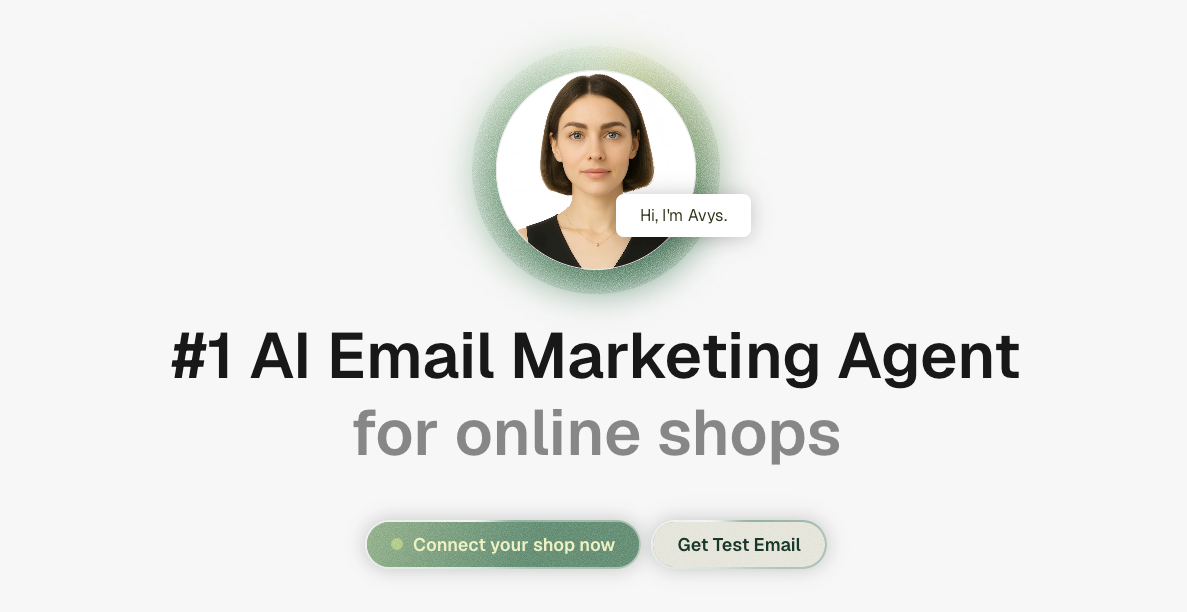
Here's a seed round that goes straight at one of my favorite topics: the gap between what retention software promises and what it actually does. Leipzig-based Birdsview has raised €2.5 million to scale Avys, an AI agent that runs an online retailer's messaging channels end to end, writing an individual message to every customer instead of blasting segments.
The details
The round is led by Fortino Ventures (the firm behind Billy Grace, the fast-growing AI infrastructure platform for digital marketers in the Benelux) and Amsterdam-based Newion, an early backer of Parloa, now a billion-dollar AI agent company. TGFS backed the company at pre-seed.
Birdsview was founded by data scientists Tim Kuesters and Ozan Brochwitz-Tuerker, who previously ran a CRM agency themselves. That biographical detail matters, because the entire pitch is built around making that business model obsolete. In the founder's words: "Avys isn't a better tool, it's the worker."
The problem they're attacking is what Birdsview calls the double spend. Traditional email platforms give retailers the tooling, but someone still has to segment customers, build the flows, and write the content. So retailers hire an agency to operate the software, typically at three to five times the license cost. They pay twice: once for the tool, once for the people who make it useful.
Birdsview's sharpest claim is structural: this problem persists by design. Agencies are the incumbents' biggest sales channel, roughly 40% of revenue by Birdsview's estimate. A vendor that automates the agency away dismantles its own distribution.
Under the hood sits a product-intelligence layer the company built alongside its first hundred customers: 1.2 million labeled products across 60 industries, learning from 52 million email interactions per month. Instead of treating a product as a name and a price, Avys models what need it satisfies, which angle sells it, and when a customer is likely to need it again. Birdsview reports 3x more clicks and 8x more revenue per email for brands using Avys.
The MartechNext take
Regular readers know why this one caught my eye. The press release even quotes the same statistic I keep hammering on: customer acquisition costs are up 222% while retention, where the real profit sits, runs on software that hasn't fundamentally changed. Every euro of value you can squeeze out of your existing customer base improves your LTV:CAC ratio without spending a cent more on acquisition. A company attacking exactly that layer is, strategically, in the right place.
I also genuinely like two things about the thesis. First, one-to-one instead of segments is the correct end state. Segmentation was always a workaround for the fact that humans can't write millions of individual messages. AI removes that constraint, so of course the segment eventually dies. Second, the channel-conflict argument is the most interesting sentence in the whole announcement. If your distribution depends on agencies, you will not build the product that replaces agencies. That's a classic innovator's dilemma, and it explains a lot about why the big ESPs ship AI features that assist the marketer rather than replace the workflow.
Now the skepticism, because vendor-reported numbers deserve it. "8x more revenue per email" is a slippery metric: fewer, better-targeted emails will always look spectacular per email, and the customers who get personalized treatment are often already your most engaged profiles. I'd want to see incrementality, ideally from a holdout test, before celebrating. The same selection effect applies to every personalization case study, including the ones I've published myself.
There's also an open question about control. Fully autonomous sending in your brand's voice is a trust exercise. One off-tone message to your best customers costs more than a quarter of agency fees. The winners in this category will be the ones that make the human-in-the-loop phase feel safe enough that retailers eventually dare to take the human out.
And a note on the moat: every AI CRM startup claims its data compounds. Sometimes it's true. 1.2 million labeled products is a real asset, but the incumbents are sitting on vastly more interaction data. Their handicap isn't data, it's the distribution conflict described above. Birdsview's window exists exactly as long as Klaviyo and friends keep protecting their agency channel. That window is real, but it won't stay open forever.
Verdict: small round, big thesis. This is one to watch, not because €2.5 million changes the market, but because the "agent replaces tool plus agency" model is coming for every corner of martech. Retention email is simply where the math is most obviously broken. :)
-- Bram Versteegh
Bram Versteegh is the founder of MartechNext, covering the business of AI in marketing: who's building it, who's funding it, and how industries put it to work.
Enjoyed this piece? Every week, What's Next delivers sharp analysis, the latest funding rounds in AI marketing, and the martech news that actually matters. Straight to your inbox, free.