WhatsApp Marketing in 2026: what marketers need to know to use it effectively

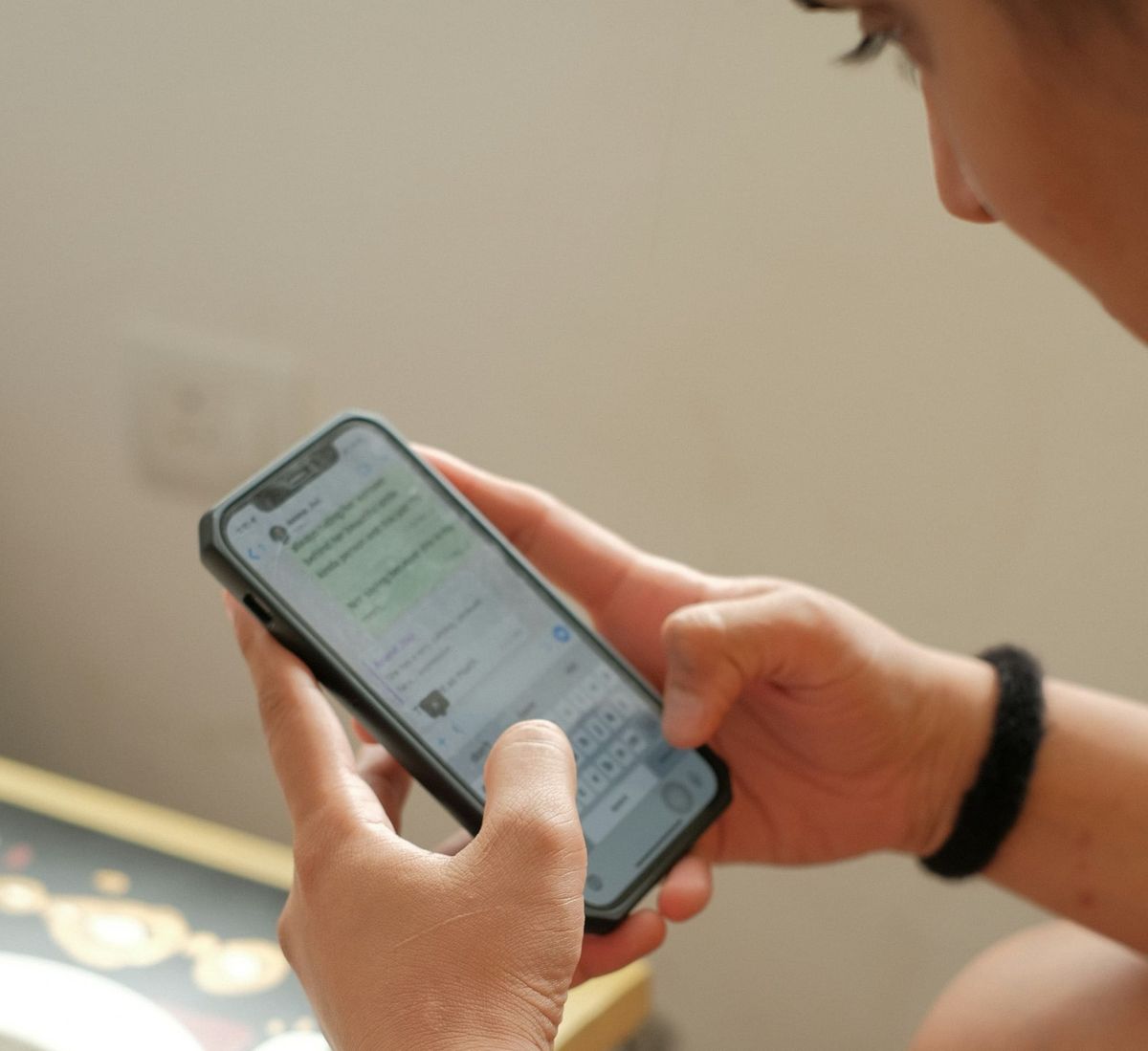
From Status Ads and AI chatbots to conversational commerce: WhatsApp is growing into a full-fledged marketing channel. These are the opportunities, the facts, and how to prepare now, wherever you're based.
WhatsApp is no longer a chat app. It's a marketing channel.
Imagine reaching your customer not through an overflowing inbox or a busy social media feed, but in the app they open dozens of times a day to talk to friends and family. The same channel where messages have a 98% open rate, where replies come within minutes, and where conversion works fundamentally differently than on any other digital channel.
That channel has existed for a long time. But until recently, for advertisers it was mainly a place for customer service and order confirmations. That is now changing fast. In 2026, WhatsApp is evolving into a full marketing, sales, and advertising platform. And for businesses in strong WhatsApp markets, that opens up new opportunities.
One important note before we start: WhatsApp's feature rollout is not uniform. What's live in Brazil or India may still be pending in the EU, and what's available in Germany may not yet be available in the Netherlands. In this article I'll walk you through the most important developments, flag where availability differs per market, and show how you can build an advantage today regardless of where you operate.
How big is WhatsApp really? Bigger than you think
WhatsApp is the most used messaging app in the world, and in many markets it's the most used app, period. It dominates daily communication across Latin America, India, large parts of Europe, Africa, and the Middle East. (The main exceptions are the US, where iMessage and SMS still lead, and markets like China, Japan, and South Korea with their own dominant messengers.)
To make it concrete, take the Netherlands, one of Europe's strongest WhatsApp markets. According to Newcom's national social media survey for 2026, WhatsApp counts 13.8 million users there, 12.1 million of whom are active daily. That makes it by far the country's biggest platform, bigger than YouTube, Instagram, and Facebook. For comparison: Instagram has 9.6 million users, TikTok 4.7 million, and LinkedIn 6.5 million. In markets like Brazil, India, and Spain, the picture is similar or even more pronounced.
What makes this extra interesting for marketers: WhatsApp is not perceived as social media. People experience it as a personal communication tool, which means messages get far more attention than a post in a feed.
That personal context translates directly into performance. Where email struggles with average open rates of 20-25%, WhatsApp consistently reaches 90-98%. Click-through rates sit above 50%, while email is happy with 1-4%. And the response rate on WhatsApp messages exceeds 55%, versus 28% for SMS.
WhatsApp combines the reach of a mass medium with the intimacy of a personal conversation. That's what makes it unique for marketers.
Status Ads: WhatsApp's first true ad format is rolling out
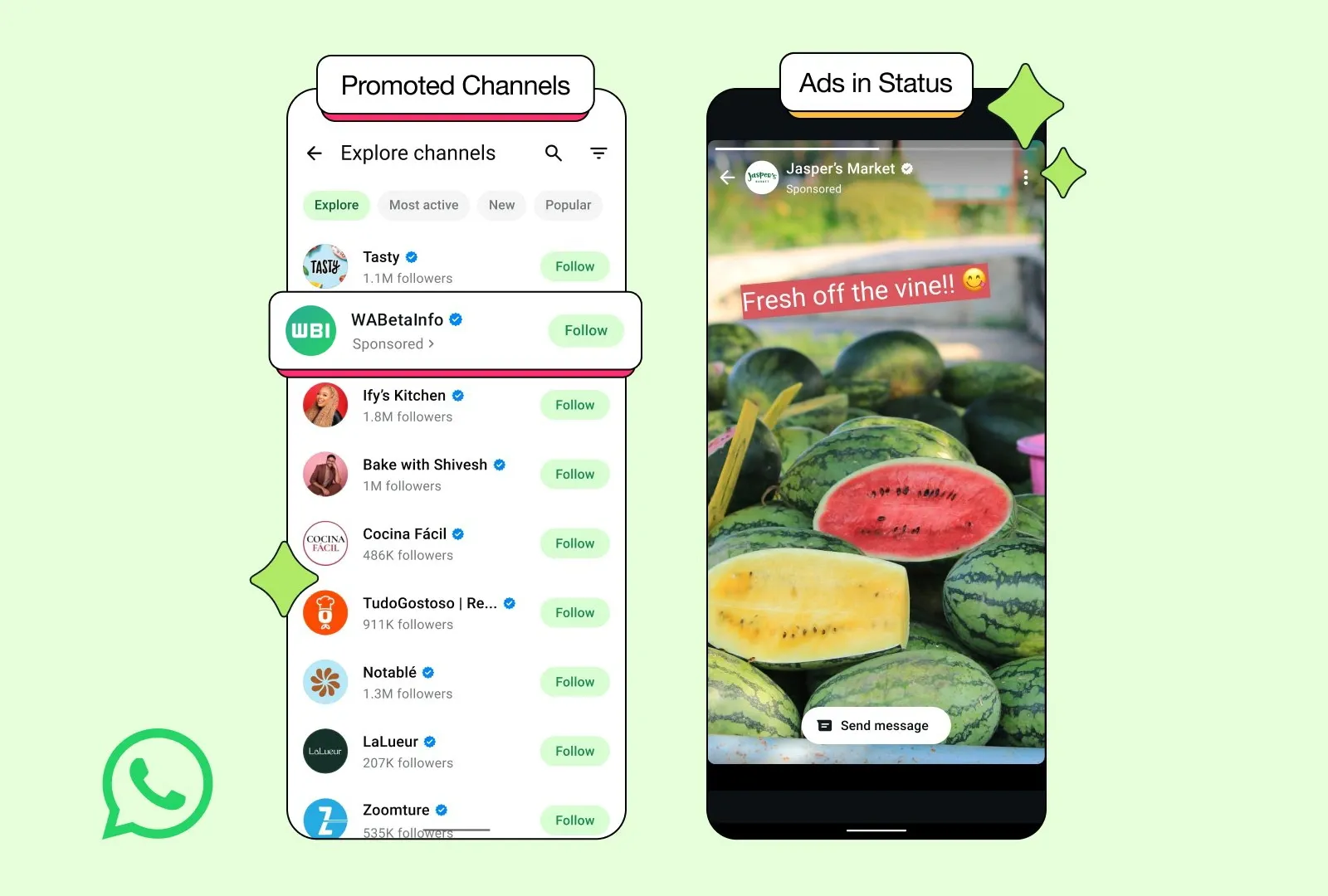
The biggest development right now is the rollout of WhatsApp Status Ads and Promoted Channels. After the global launch in June 2025, the European Union was initially excluded because of GDPR review by the Irish Data Protection Commission. In March 2026, Meta confirmed via its DMA compliance report that both ad formats are coming to the EU. Status Ads are now active globally, and they're already appearing for users in several European countries. The rollout is happening market by market, so check the current status for your country before you plan campaigns. (In the Netherlands, for example, advertisers can't run Status Ads yet at the time of writing.)
This is a big change. Until now, WhatsApp was an entirely organic or click-to-chat channel in Europe. Once Status Ads become available in your market, programmatic and direct-response placements open up for the first time inside an app that a majority of your customers use daily. The lesson from every previous rollout: the companies that have their strategy and technical foundation ready are the first to profit.
How do WhatsApp Status Ads work?
Status Ads appear as fullscreen ads in the Updates tab of WhatsApp, the place where users view their contacts' status updates. The format is comparable to Instagram Stories Ads, but shown in a considerably more personal context.
It works as follows:
- The user opens the Updates tab to view status updates from contacts
- Between the organic status updates, a fullscreen ad appears (image or video, maximum 30 seconds)
- The ad contains a CTA button that directly opens a WhatsApp conversation with the business
- For 72 hours after the first interaction, unlimited follow-up messages can be sent at no extra cost
In addition, there are Promoted Channels: channel listings in the channels overview of the Updates tab, which businesses can use to grow followers and engagement. Think of a travel company sharing weekly destination tips, or an e-commerce brand publishing exclusive deals for followers.
Targeting: privacy-first, but effective
WhatsApp Status Ads deliberately use limited targeting to respect user privacy. The available options are location (country, city, or region), device language setting, age category, and activity in the Updates tab. When a user has linked WhatsApp to the Meta Accounts Center, ad preferences from Facebook and Instagram can optionally be included for retargeting and lookalike audiences.
Important: personal messages, conversations, group memberships, and contact lists are not used for ad targeting. All private chats remain end-to-end encrypted. In the EU, Meta has introduced a "pay or consent" model: users choose between free with ads, or a paid subscription of roughly 3-4 euros per month to stay ad-free.
The new KPIs: from clicks to conversations (CPSC)
With WhatsApp Status Ads, the primary KPI shifts from clicks to started conversations. This is a fundamentally different kind of measurement than traditional display campaigns. The key metrics become Cost Per Started Conversation (CPSC), the qualification ratio of conversations, the conversion rate of qualified leads, and the response rate on your chat flows. It pays to think about this now, so your measurement and dashboards are ready the moment Status Ads go live in your market.
WhatsApp marketing goes far beyond advertising
Status Ads are only part of the story, and in some markets a part that's still on its way. But WhatsApp has already grown into a complete marketing and sales platform in 2026, with capabilities you can use today. The real power sits in the combination of reach, personalization, and conversational commerce, and you don't need Status Ads for that yet.
1. Conversational commerce: the entire customer journey shifts into a chat
Consumers increasingly don't want to browse websites, fill out forms, or wait to be called back. They want to discover products, ask questions, and complete purchases within a single conversation. WhatsApp makes that possible with a product catalog in the chat, in-chat shopping carts, and integrated payment options (availability of payments varies per market).
This approach shortens the sales cycle considerably. Instead of the traditional path from ad to landing page to form to follow-up, it becomes: ad, click, conversation, conversion. Fewer steps, less drop-off, higher conversion.
2. AI-driven conversations replace static chatbots
The first generation of WhatsApp chatbots worked with standard rule-based flows that regularly frustrated users. More and more companies are now building AI assistants that understand intent, context, and sentiment. These assistants answer complex customer questions, automatically qualify leads based on conversation data, and hand chats over to customer service at the right moment.
In travel, for example, this looks like an AI assistant that picks up the conversation after an ad click, asks qualifying questions, gives personalized recommendations powered by a recommendation engine, and guides the customer toward a booking. The difference with the classic approach: instead of stopping at generating a click, you make sure that click actually produces value and converts.
3. From generic blasts to personalized chat flows powered by your first-party data
Generic WhatsApp messages will lose their effectiveness over time. Customers increasingly expect contextual communication that takes their history and preferences into account. By connecting WhatsApp to your CRM or CDP, in combination with an AI model, you can trigger behavior-driven messages, adapt campaigns based on browsing and purchase history, and keep conversations consistent across teams.
In practice, this means connecting your WhatsApp flows to systems like Klaviyo, HubSpot, or your CDP, and using a recommendation engine for the right predictive suggestion. That way WhatsApp doesn't become an isolated channel, but an integrated part of your complete marketing ecosystem, where email, social, website, and WhatsApp reinforce each other.
4. Click-to-WhatsApp Ads via Facebook and Instagram
Separate from the new Status Ads, Click-to-WhatsApp Ads via Facebook and Instagram have been available for a while and are proven effective, in every market where WhatsApp is used. These ads appear in the feed or stories of Facebook and Instagram and open a WhatsApp conversation directly on click. The advantage: you combine the advanced targeting of Meta's ad platform with the directness of a WhatsApp conversation.
The complete targeting options of Meta Ads Manager are available: demographic targeting, geographic targeting, behavioral and interest targeting, custom audiences, and lookalike audiences. This makes Click-to-WhatsApp Ads particularly suitable for lead generation in sectors where the personal conversation plays a crucial role, such as travel, real estate, education, and financial services.
5. WhatsApp Business API: essential for serious applications
All professional WhatsApp marketing activities run on the WhatsApp Business API. The standard WhatsApp Business App is fine for small businesses, but offers limited functionality: broadcast lists are capped at 256 contacts, there's no automation, and no clickable buttons. The API offers scalability, automation, template approval, and CRM/CDP integration.
Meta uses a conversation-based pricing model: a "conversation" is a 24-hour window within which unlimited messages can be exchanged for a fixed rate. Costs vary per country and conversation type, with marketing conversations being the most expensive, followed by utility, authentication, and service. Note that WhatsApp qualifies almost everything as a marketing conversation; in Western European markets, a 24-hour window costs around 13 cents, but check the rate card for your countries.
Practical applications: how you can use WhatsApp today
The theory sounds promising, but how do you translate this concretely into your marketing strategy? Here are some example use cases.
E-commerce
Follow up on abandoned carts via WhatsApp instead of email. Send product recommendations based on browsing behavior. Run abandoned cart series with AI-personalized suggestions. Automate post-purchase follow-up with reviews, upsells, and repeat purchases. The higher open rates translate directly into higher recovery rates.
Travel
The travel industry is exceptionally well suited to WhatsApp marketing. Once Status Ads are available in your market, a last-minute campaign via a Status Ad with an urgent CTA becomes possible: interested travelers are connected directly to an AI assistant that checks availability and guides the booking. Seasonal early-bird campaigns combine inspiring destination videos with personalized advice. And a WhatsApp channel with weekly destination tips builds an engaged audience today for future campaigns. With Click-to-WhatsApp Ads via Facebook and Instagram, you can start right now.
B2B and services
Lead qualification via conversational funnels: instead of a form on your website, a prospect starts a WhatsApp conversation in which an AI assistant asks the right questions and routes directly to the right account manager. Quote requests, demo sign-ups, and questions are handled more personally and faster.
GDPR and privacy compliance: practical rules to stick to
In the EU, strict rules apply to WhatsApp marketing, and similar consent-based rules exist in many other markets. This is not a side issue but a core part of your strategy. The most important rules:
- Opt-in is mandatory. You need explicit opt-in consent: a pre-ticked box in your terms and conditions doesn't count. You need a clear, affirmative action, and you must document it.
- Unsubscribing must be easy. Every marketing message must contain a clear opt-out option.
- Respect frequency. Too many spam complaints lower your phone number quality score and limit how many messages you can send per day.
- Start with a maximum of 1-2 messages per week and adjust based on engagement.
Your foundation for a WhatsApp strategy in 2026: a first roadmap
The companies that will get the most out of WhatsApp marketing are the ones doing their homework now. Here's a concrete roadmap to get started quickly.
Step 1: Get your technical foundation in order. Make sure you have a WhatsApp Business Account (or the API for serious use cases), that your Facebook Business Page is linked to your WhatsApp number via Meta Business Manager, and that you have access to Meta Ads Manager.
Step 2: Define your channel strategy. WhatsApp doesn't replace channels, it strengthens them. Determine where WhatsApp has the biggest impact in your customer journey. Is that lead generation? Post-purchase follow-up? Customer service? Start with one clear use case and build from there.
Step 3: Build conversational content. WhatsApp demands a different creative approach than display or search ads. Messages that feel like advice perform better than pushy sales pitches. Develop content that fits a conversational context, and map out which questions your customers ask at every stage of the customer journey. (You should be doing this anyway for your GEO optimization.)
Step 4: Invest in automation. Manually replying to every WhatsApp message doesn't scale. Invest in AI-driven chat flows that qualify leads, answer questions, and route to the right team. The combination of an AI assistant with human escalation is the sweet spot.
Step 5: Measure, learn, optimize. Don't steer on opens and clicks alone, but on conversation quality, conversion rate, and customer value. The data from WhatsApp conversations is gold for improving your targeting, your offering, and your complete marketing ecosystem.
What a modern WhatsApp marketing stack looks like
Using WhatsApp as a marketing channel sounds simple, but there's more to it than creating a Business Account and sending some messages. You need the right technical foundation, smart automation, and most importantly: the data that makes every message relevant. The building blocks:
A recommendation engine as the intelligence layer. The quiet force behind effective WhatsApp marketing is a system that analyzes customer behavior, purchase history, and profile data to predict which products, destinations, or offers best fit each individual customer. That intelligence shouldn't live in WhatsApp alone: the same layer should power your website personalization, email campaigns, and ads, so every channel gets smarter.
An AI assistant trained on your business data. Not a generic chatbot with canned answers, but an assistant trained on your product range, availability, prices, terms, and frequently asked questions. The result is an assistant that answers as if your best employee is on the line, 24/7 and at scale. This matters most in industries where the advisory conversation is crucial to the purchase, such as travel.
1-on-1 WhatsApp newsletters with AI follow-up. A fundamentally different model than the traditional email newsletter: instead of one message to an entire list, you send individual messages tailored to each recipient's profile and preferences, with an AI assistant behind them that responds instantly when a customer replies.
A concrete example: an e-commerce company sends an offer for a specific clothing item via WhatsApp. The consumer replies that it's not their preferred color or style. Instead of a dead end, the AI assistant picks up the conversation. Based on the reply, previous purchase behavior, and what similar customer profiles bought, the assistant immediately makes new, relevant recommendations. What started as a simple newsletter becomes a personalized sales conversation, fully automated, and turns into a genuine additional sales channel.
This works in any industry. A travel company sends summer holiday inspiration. The customer replies that their budget is lower than the offers shown. The AI assistant adjusts on the spot and presents alternatives that fit the budget, the travel period, and the preferences from earlier interactions. Every conversation generates data that makes the next recommendation even better.
No silo, but an accelerator for your entire customer journey. The most important principle: WhatsApp should not become a standalone channel. The data from WhatsApp conversations, profiles, and interactions should flow back into your central intelligence layer and be used across your whole marketing ecosystem. A preference someone shares via WhatsApp improves the product recommendations on your website, the personalization in your emails, and the targeting of your ads. Everything reinforces everything else.
Conclusion: WhatsApp is becoming a major channel, so get in early
WhatsApp marketing is making a giant leap in 2026. The combination of massive daily reach, the ongoing rollout of Status Ads across markets, increasingly powerful AI assistants, and the shift toward conversational commerce creates an enormous opportunity.
The history of digital advertising always shows the same pattern: early movers win. The companies that mastered Google Ads (AdWords) and Facebook Ads first profited for years from lower costs and less competition. The same was true for Google Shopping, Instagram, and TikTok. WhatsApp is next.
The difference with earlier channels is that WhatsApp adds an extra layer: the conversation. Not just reach, not just a click, but an actual interaction with your potential customer. While Status Ads may still be on their way in your market, you can build a head start today with Click-to-WhatsApp Ads, the Business API, AI chat flows, and CRM/CDP integration. Whoever has their foundation in order now will be first in line when Status Ads go live.
-- Bram Versteegh
Bram Versteegh is the founder of MartechNext, covering the business of AI in marketing: who's building it, who's funding it, and how industries put it to work.
Enjoyed this piece? Every week, What's Next delivers sharp analysis, the latest funding rounds in AI marketing, and the martech news that actually matters. Straight to your inbox, free.