Meta Conversations 2026: the Business Agent is here, and it changes your WhatsApp strategy

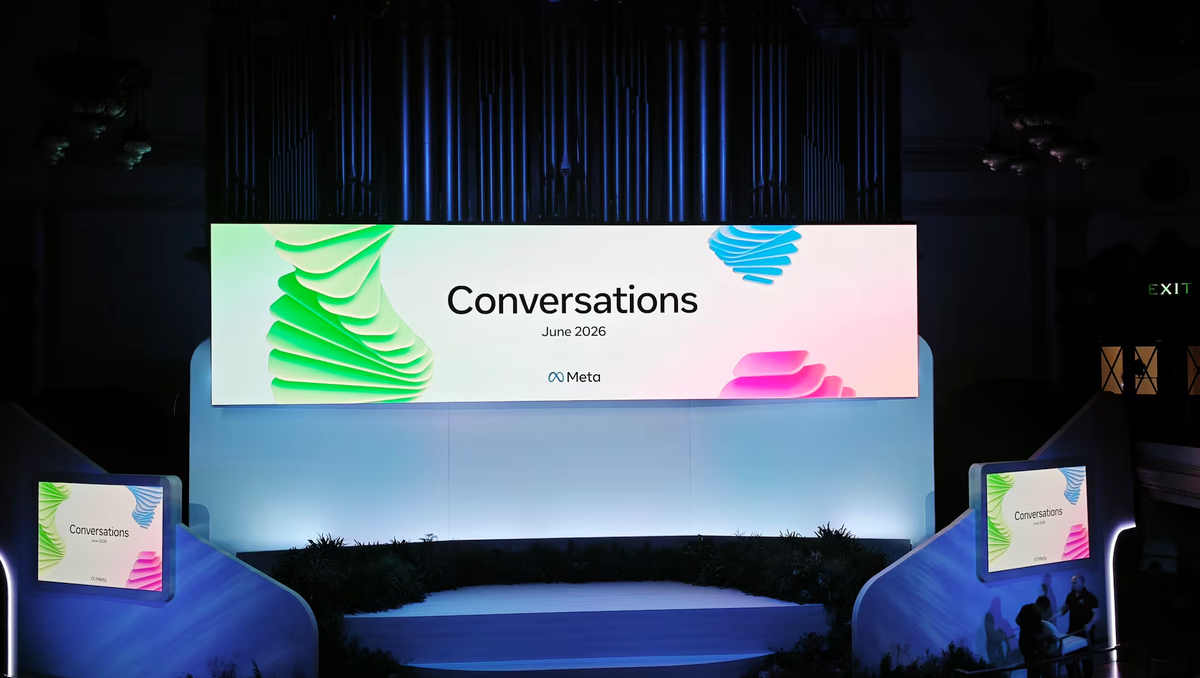
On June 3, Meta presented its biggest WhatsApp announcement in years in London. Not everything is available in every market yet, but the direction is crystal clear. Here's what was announced, what you can do with it today, and why it confirms the case for conversational commerce, while raising an important strategic question about who owns your customer relationship.
First things first: what is Conversations?
Conversations is Meta's annual business messaging conference, and this year's edition was the fifth in a row. The event took place on Wednesday, June 3, 2026 in London, with a global livestream. On stage were, among others, Naomi Gleit (Head of Product at Meta) and Alice Newton-Rex (VP and Head of Product at WhatsApp).
Why this conference matters: every year, it's the clearest signal of where Meta wants to go with business messaging across WhatsApp, Messenger, and Instagram. And the 2026 message is not subtle. For Meta, messaging stopped being a service channel a long time ago; it's becoming a growth, sales, and automation layer. The numbers underline it: Meta's AI tools now handle around 10 million business conversations per week, a tenfold increase since January 2026.
The new features at a glance
1. Meta Business Agent: the headline announcement
The star of the conference is the Meta Business Agent: an AI agent that handles your customer conversations across WhatsApp, Messenger, and Instagram. You set it up in a few minutes, or connect it to your existing systems.
What the agent can do:
- Answer questions in your customer's language, in your brand's tone of voice
- Recommend products from your catalog
- Schedule appointments
- Qualify leads
- Close sales
- Hand over to a human employee the moment the conversation calls for it
This didn't come out of nowhere. Meta ran pilots for almost two years in markets like India, Mexico, and Brazil, and more than a million businesses were already using an earlier version on WhatsApp and Messenger. So this is not a cold launch, but the scaling up of something that was already running in practice.
An important detail: getting started is free. But this is the first AI agent Meta explicitly plans to charge for. Paid subscriptions will roll out in the coming months along two tracks: smaller businesses pay through subscription tiers within WhatsApp Business Premium, while larger businesses pay based on token usage. The more the agent processes, the higher the bill. Meta has not yet published exact pricing.
2. Meta Business Agent Platform: for larger organizations
Alongside the ready-made agent, Meta launched the Business Agent Platform: an infrastructure layer that lets larger companies build, customize, and roll out agents at scale. The platform connects to hundreds of external systems, with Shopify and Zendesk among the named integrations, and offers enterprise controls, built-in safety frameworks, and measurability.
3. WhatsApp Business Discovery: findability inside the app
Meta is going to make it easier to find businesses within WhatsApp itself: by typing a business name into the search bar, or by sharing a phone number or contact card in a chat. Note: this feature was not yet live at the time of the conference. Meta called it an upcoming update.
4. What's coming next
Finally, Meta sketched a roadmap of features that aren't available yet, but show where things are heading:
- Daily briefings that summarize the night's conversations and surface insights (now in limited testing on WhatsApp Business, Instagram Pro, Messenger, and Meta Business Suite)
- Market research and surfacing product insights
- Calendar management
- Competitive intelligence
The common thread: from giving individual answers to structuring the work around them. Think triage, prioritization, and the logical next step.
What's actually available in your market, and what isn't?
This is where you need to stay sharp. "Global rollout" and "available in your market as promised" are not the same thing. A sober look at the current state:
What's live. The Business Agent has launched as a global product and is, at its core, a Meta-hosted service. EU businesses can in principle use that hosted agent, and getting started is free. WhatsApp Status Ads and Promoted Channels, which I covered earlier, have been rolling out across European markets; in the Netherlands, for example, they've been live since late February 2026. WhatsApp campaigns can be managed through the same Ads Manager as Facebook and Instagram.
What's not settled yet. The paid subscriptions (WhatsApp Business Premium tiers and token pricing) will only roll out in the coming months. WhatsApp Business Discovery isn't live anywhere. The briefings and the entire "coming soon" list are in limited testing, without a concrete EU date.
The EU caveat you can't ignore. Meta has a consistent pattern in Europe: AI features arrive here later, and often stripped down. Meta AI itself took about eight months longer to reach the EU than the US, and started with a slimmed-down feature set because of the strict privacy regime. There's something else at play too: since June 3, EU businesses are not allowed to self-host Meta's Llama 4 models under the license. That's not a blocker for the hosted Business Agent, but it does illustrate Meta's room for maneuver in Europe. And the model underneath the Business Agent? Meta hasn't disclosed it.
In short: the direction is right, but don't count your chickens. Check per feature what is actually switched on for your account in your market before you build your strategy on it.
The real question: rent from Meta, or own your intelligence layer?
Let's be honest: this announcement is good news for everyone betting on conversational commerce. With the Business Agent, Meta is building out exactly the thesis that independent conversational commerce stacks have been built on: WhatsApp is not an extra newsletter, it's the channel where acquisition, service, and sales come together. When the biggest player in the world validates your thesis, you're in a good place.
But there is an important difference between renting from Meta and keeping control yourself. And that's where the strategic choice sits.
The Business Agent is a generic agent, inside Meta's walls, on Meta's terms, running on an undisclosed model, and soon billed per token or per subscription. The more it works, the more you pay. That's the classic walled-garden mechanism: convenient to start with, expensive and dependency-creating to scale on.
The alternative is an intelligence layer you own, spanning your whole funnel instead of sitting on top of one channel:
- Acquisition: personal 1-on-1 campaigns via WhatsApp, with AI replies and predictive product recommendations powered by a recommendation engine. No bulk, no broadcast: genuinely personal contact, with attribution all the way down to revenue.
- Guidance: a whitelabel WhatsApp assistant that supports your customer 24/7, during and after the purchase, under your own brand and connected to your own backend. When things get uncertain or complex, it hands over warmly to a human.
Together, they cover the entire customer journey: from campaign to conversation to fan. Where most setups stop at the click, this approach makes sure the click converts.
So the question you should be asking yourself as an advertiser is not "should I use the Business Agent?". You can absolutely deploy it where it fits. The real question is: do I want to place my customer relationship and my data inside Meta's environment, or do I want to own that capability as a layer over my own channels? The more dependent and expensive the platforms become, the more valuable your own intelligence layer and a solid first-party data foundation become.
What you can do now
A few next steps:
- Stop waiting on WhatsApp. With 3 billion users worldwide and 90%+ open rates, it's a serious growth channel by now, not an experiment.
- Activate the Business Agent, but factor in the token and subscription costs when scaling, and verify what's actually live in your market.
- Build your own layer. Combine acquisition, journey-long guidance, and prediction in a stack you control, so you're not locked into one platform and one pricing model.
With Conversations 2026, Meta has set the tone: the future of marketing is a personal conversation. I fully agree. The only question is on whose terms you'll be having those conversations: the platform's, or your own.
-- Bram Versteegh
Bram Versteegh is the founder of MartechNext, covering the business of AI in marketing: who's building it, who's funding it, and how industries put it to work.
Enjoyed this piece? Every week, What's Next delivers sharp analysis, the latest funding rounds in AI marketing, and the martech news that actually matters. Straight to your inbox, free.