CM.com's profit jump is proof the conversation is becoming the funnel, not just a feature
CM.com, the Breda-based communications and martech provider behind the Halo platform, reported second-quarter results this week. Revenue grew 14 percent year over year to 67 million euros, up from 9 percent growth in Q1, so the growth rate is accelerating, not just holding steady.


Most of what I write about in this newsletter is funding rounds: promises, theses, money committed to a bet that hasn't paid off yet. This one is different. CM.com just posted numbers, real ones, and they happen to validate something I've been arguing for a while: the conversation is becoming the funnel, not a feature bolted onto it.
That matters because conversational commerce has lived mostly on vibes so far. Vendors love to talk about WhatsApp open rates and chatbot engagement. What we rarely get is a company at real scale showing that the model actually makes money. CM.com just did.
The details
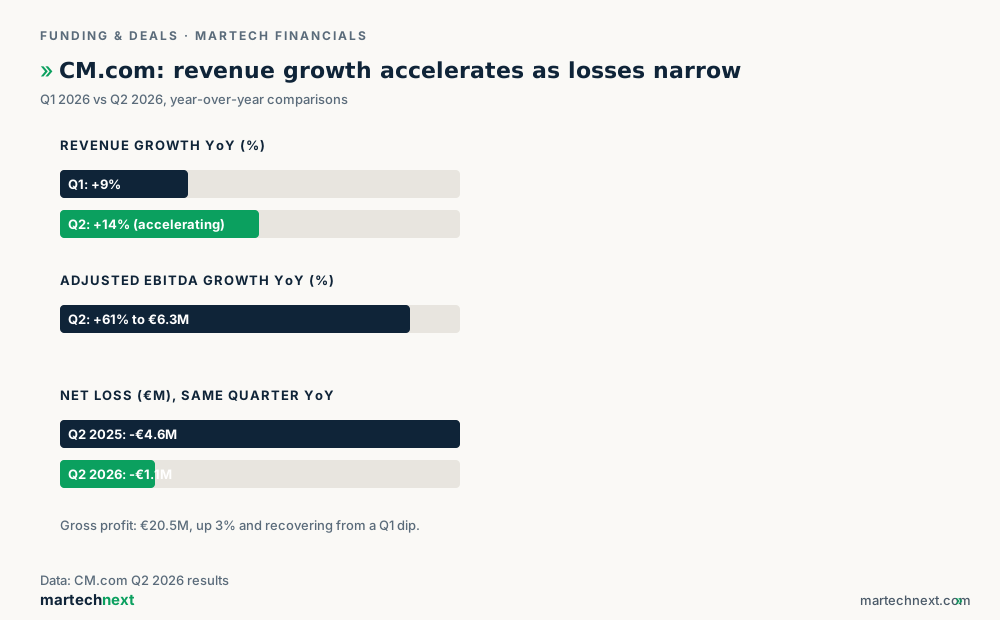
CM.com, the Breda-based communications and martech provider behind the Halo platform, reported second-quarter results this week. Revenue grew 14 percent year over year to 67 million euros, up from 9 percent growth in Q1, so the growth rate is accelerating, not just holding steady. Adjusted EBITDA rose 61 percent to 6.3 million euros. Gross profit came in at 20.5 million euros, up 3 percent, recovering from a small dip earlier in the year.
There's still a net loss of 1.1 million euros on the bottom line. But compare that to the 4.6 million euro loss in the same quarter last year, and the trend line is unmistakable. CEO Jeroen van Glabbeek called it "clearly improved operational leverage." The company maintains its full-year guidance of over 30 percent adjusted EBITDA growth.
The MartechNext take
Let's apply the skepticism checklist for a second, because I do that to everyone, including companies I'm rooting for.
Is this a per-metric flattering itself? Not really. Revenue, EBITDA, and gross profit are top-line, verifiable numbers, not "8x engagement" style vendor math. Is there a selection effect? Also not much of one here: this is a public company reporting quarterly results, not a case study cherry-picked from a happy customer. Is the "30 percent EBITDA growth" guidance vendor spin? It's forward guidance, so treat it as a target, not a fact, but the direction of travel across three straight quarters is hard to argue with.
So what does this actually tell us?
CM.com's business is built on messaging infrastructure: SMS, WhatsApp Business API, voice, and increasingly the Halo platform, which bundles conversational AI with commerce and service workflows. When a company like this shows accelerating revenue growth and improving margins at the same time, that's the tell. It's not just growing by throwing more sales reps at more logos (that shows up as revenue growth with flat or worsening margins). Operating leverage improving alongside revenue acceleration usually means the infrastructure is doing more of the work per euro spent. That's what maturing platform economics look like.
This is the same thesis I've written about with Meta's Business Agents and in the WhatsApp Marketing 2026 piece: the thread is the new funnel. Commerce is moving into messaging, and the companies that provide the plumbing for that shift are the ones to watch, more than the AI chat wrapper of the month. CM.com isn't glamorous. It doesn't have a slick AI narrative or a nine-figure Series B behind it. It's a communications company that's been building conversational infrastructure for over two decades and is now seeing the market catch up to the thesis.
Here's the honest caveat: one company's quarter is not an industry trend. CM.com operates across many verticals and geographies, and its Halo platform is one of several bets in a broader portfolio that includes SMS and payments. I'd want to see this pattern repeat for a few more quarters, and ideally see it echoed by other conversational commerce players (Sinch, Infobip, and the WhatsApp BSP ecosystem broadly) before calling it a category-wide inflection point. A single earnings beat is a data point, not a trend line.
But it's a genuinely useful data point, because most of what we get in this space is vendor-reported case studies with selection bias baked in (the same critique I'd apply to my own published cases, for the record). Public company financials are audited, comparable quarter over quarter, and impossible to cherry-pick. When one of the few publicly listed conversational commerce infrastructure providers shows accelerating growth and improving margins in the same breath, that's worth more than a dozen glossy funding announcements.
Verdict: small quarter, meaningful signal. If you're building or buying into conversational commerce infrastructure, this is the closest thing to hard proof yet that the category is past the hype phase and into the "actually makes money" phase. Keep an eye on Q3 :)
-- Bram Versteegh
Bram Versteegh is the founder of MartechNext, covering the business of AI in marketing: who's building it, who's funding it, and how industries put it to work.
Enjoyed this piece? Every week, What's Next delivers sharp analysis, the latest funding rounds in AI marketing, and the martech news that actually matters. Straight to your inbox, free.