Meta Business Agents: your customers will soon buy in the chat, and they may never see your website
Imagine your best customer next quarter: she discovers your brand through the WhatsApp search bar, asks a few questions in the chat, browses your product feed, and completes the purchase. All in one thread.

In this article:
- What Meta Business Agents are, and why they're a step beyond the classic chatbot
- The two tiers: the free self-serve agent versus the enterprise Business Agent Platform
- WhatsApp Business Discovery: the search engine hiding inside a messaging app
- Why this is part of a bigger shift, from OpenAI's product feed ads to the pressure on the product page
- A practical to-do list for marketers, wherever you operate
Imagine your best customer next quarter: she discovers your brand through the WhatsApp search bar, asks a few questions in the chat, browses your product feed, and completes the purchase. All in one thread. She never opens your website, never sees your carefully optimized landing page, and never touches your checkout flow.
That scenario stopped being hypothetical at Meta Conversations 2026 in London, where Meta introduced the Business Agent: autonomous AI agents that guide customers through support, product discovery, and checkout inside a single WhatsApp, Messenger, or Instagram thread. I covered the announcement itself in my earlier analysis of Meta Conversations 2026. This piece zooms out: what has happened since, what it means internationally, and what you should actually do about it.
From chatbot to agent: what changed
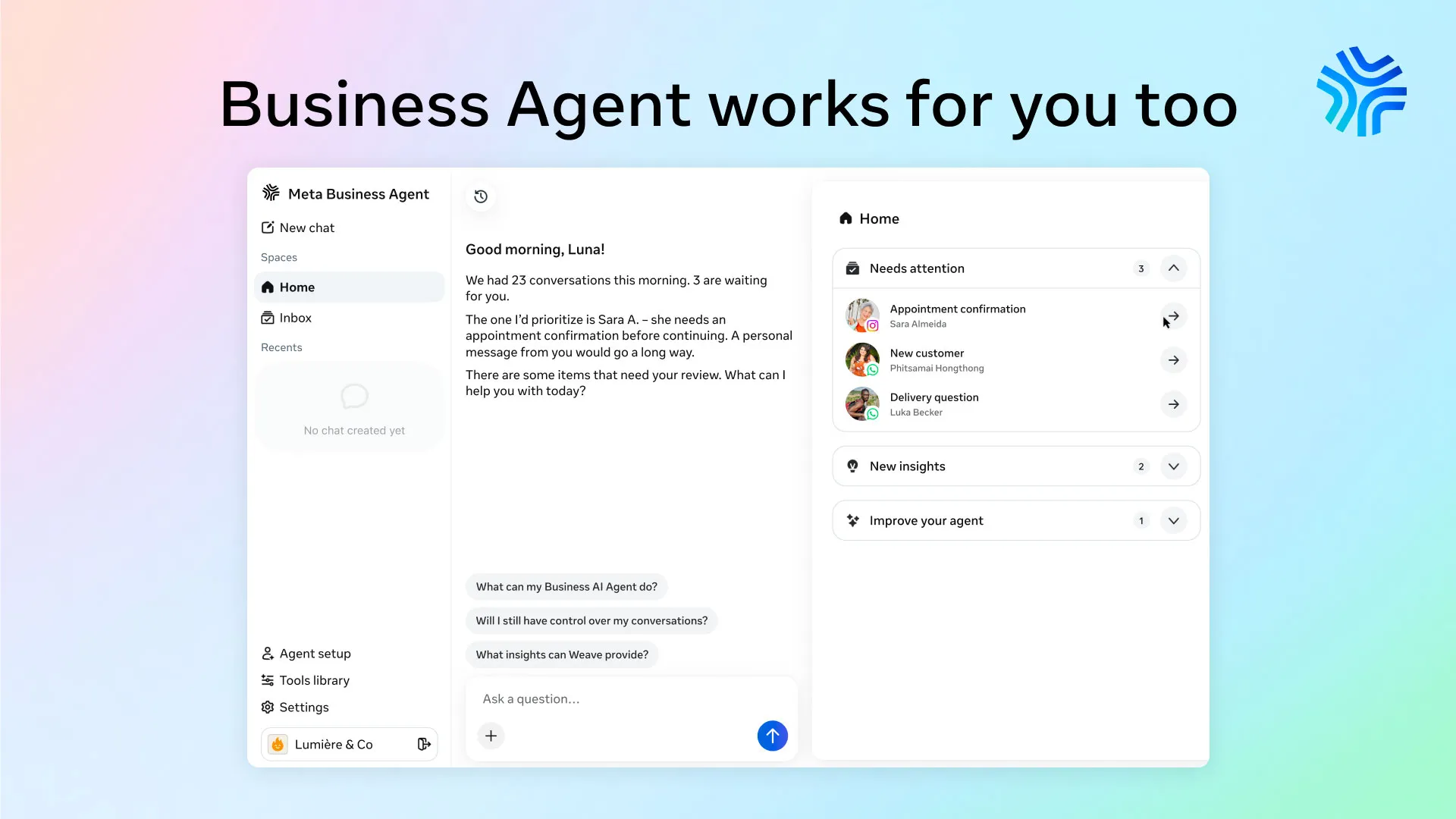
The difference between a Business Agent and the chatbots you know is fundamental. Rule-based bots follow scripts and break the moment a customer goes off-script. Business Agents understand context, hold multi-turn conversations, respond in the customer's language while keeping your brand voice, and, crucially, take action: checking real-time inventory through API connections, qualifying leads, booking appointments, and walking a customer through payment.
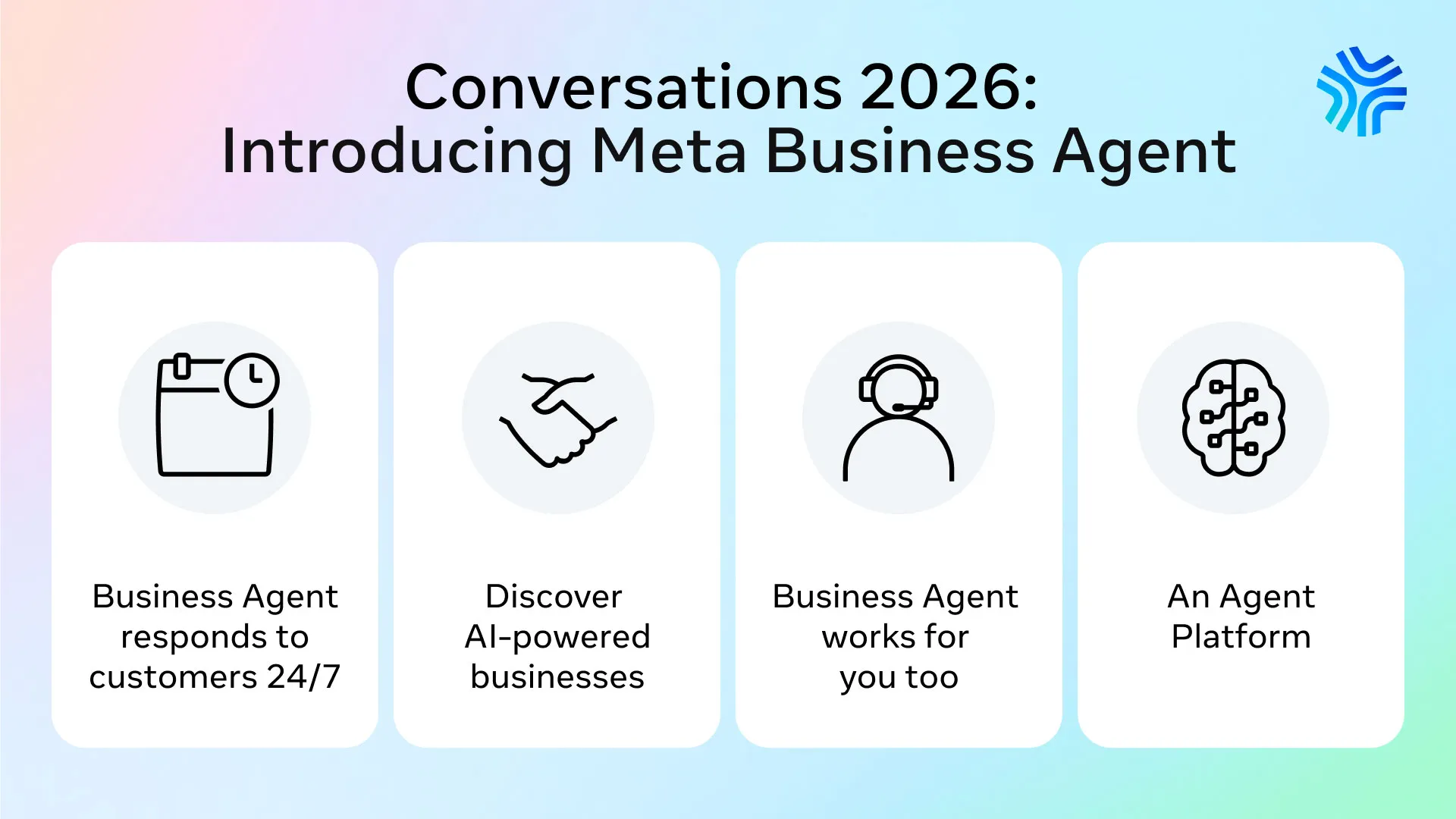
The agent learns from your own materials: chat history, website, product catalog, and Facebook page. Meta says more than one million businesses were already using a version of the agent before the global announcement, on top of more than one billion active business threads per day across WhatsApp, Messenger, and Instagram. That installed base is exactly why this launch matters more than any startup demo: the customers are already in the channel. The agent just removes every reason to leave it.
Two tiers, and a meter that starts running
In practice, Meta launched two different products under one name, and the distinction matters for your planning.
The self-serve tier lives directly inside the WhatsApp Business app: set up in minutes, train it on your existing content, and it responds to inbound conversations around the clock. It's deliberately simple, which also means limited. It handles inbound only, doesn't send broadcast campaigns, and doesn't connect to your CRM. Think of it as the entry drug for automated messaging: millions of small businesses will get their first taste of conversational AI here.
The Business Agent Platform is the enterprise version, currently in limited early access. This is where it gets interesting for serious commerce: connections to hundreds of systems like Shopify and Zendesk, enterprise-grade guardrails, custom rules, and measurement built in. This tier is what turns the agent from a support tool into an autonomous commerce layer.
And note the pricing timeline. The free testing window that opened on July 1 closes soon: from August 1, 2026, Business Agent conversations are billed per token, at $2.00 per million tokens, roughly 4 to 5 cents per conversation. A second pricing wave follows on October 1. Two takeaways: first, if you want to experiment cheaply, the window is closing. Second, the unit economics are remarkable. At a few cents per handled conversation, the cost comparison with human support teams, or even with outsourced chat agencies, isn't close.
The quiet headline: WhatsApp becomes a search engine
The feature that received less attention than it deserves is WhatsApp Business Discovery: users can now find businesses directly through the WhatsApp search bar. Combine that with the new sharing mechanics (someone shares your business in a chat, the recipient starts a conversation with one tap; someone shares a restaurant, directions are available inside the same thread) and you're looking at something we should name for what it is: a new search engine with unusually high purchase intent, inside one of the most used apps on the planet.
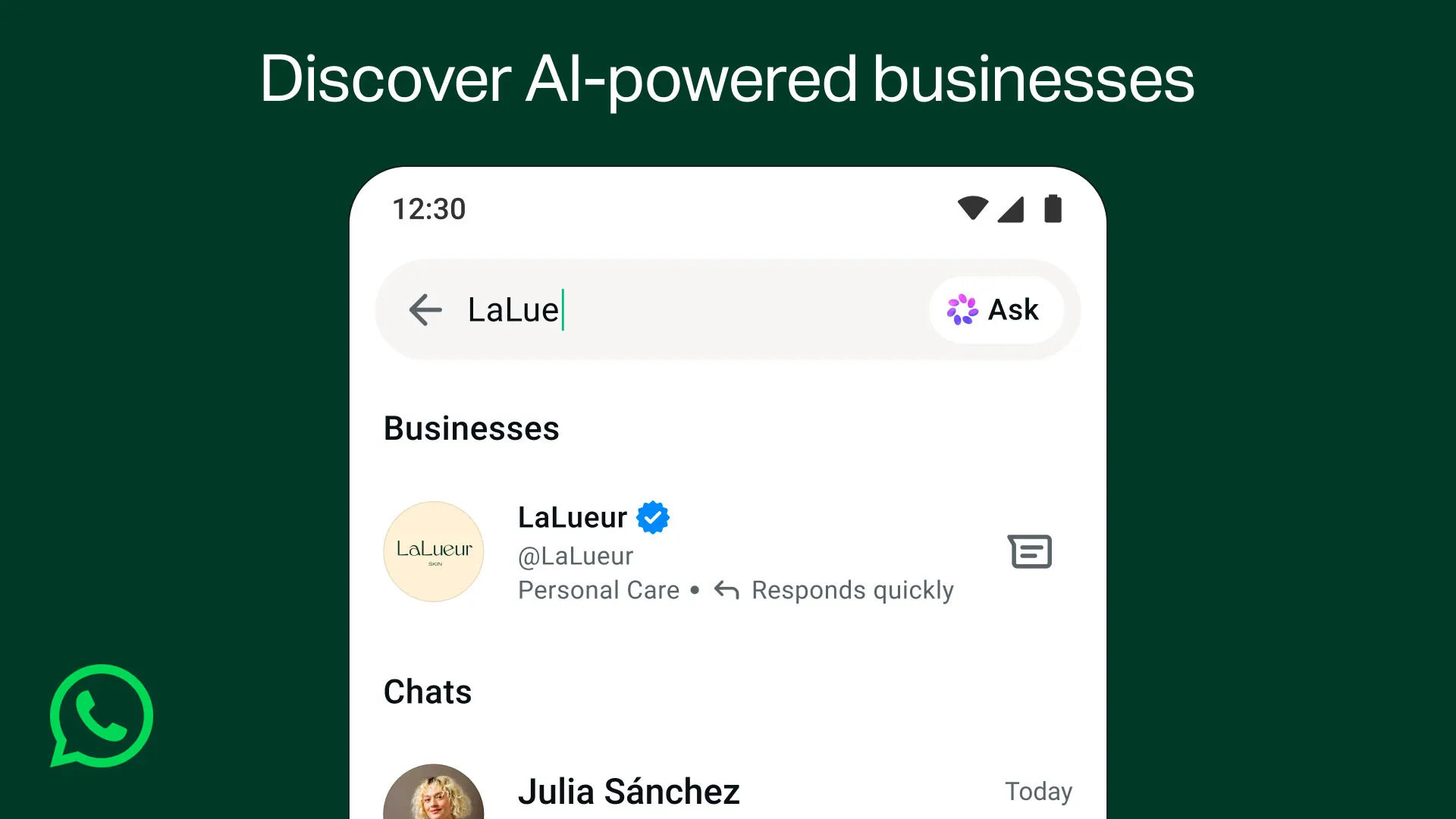
For markets where WhatsApp dominates daily communication (Brazil, India, Indonesia, Mexico, large parts of Europe, Africa, and the Middle East), this is not a niche feature. Being findable in WhatsApp search will become a discipline in its own right, the way being findable in Google became one twenty years ago. Early movers will enjoy the same advantage they always do: less competition for the same intent.
The bigger pattern: the purchase is moving into the conversation
Meta is not acting in isolation. Look at what happened in the past few months across the industry:
OpenAI opened up product feed ads in ChatGPT, letting retailers connect their product catalogs so sponsored products appear directly inside conversations, targeted on conversational intent rather than search history or browsing behavior. The setup deliberately mirrors Google Shopping, down to the feed schema, so merchants can reuse the structured product data they already maintain. Agentic checkout support through platforms like Shopify closes the loop from question to purchase.
Add Google's own moves toward agent-led shopping experiences, and the direction is unmistakable: every major platform is racing to keep the entire journey, from discovery to payment, inside its own conversational surface. The classic product page, the destination we've spent two decades optimizing, is under structural pressure. Not dead, but no longer the only place where buying happens.
For marketers, this creates a new discipline that sits somewhere between SEO, feed management, and CRM. Call it conversational commerce optimization: making sure your products, answers, and brand voice are machine-readable and agent-ready, wherever the conversation happens.
What you should do now
Wherever you operate, the homework is the same. Four priorities:
1. Get your product feed in order. Your feed is no longer just fuel for Google Shopping and Meta catalog ads. It's what a Business Agent serves to customers inside the chat, and what ChatGPT reasons over when someone asks for "running shoes under $100". Complete titles, accurate availability, rich descriptions: feed quality is now customer experience, not backend hygiene.
2. Treat WhatsApp discoverability like SEO. Complete your business profile, think about the terms customers would search for, and monitor what shows up. This field barely exists yet, which is precisely why it's worth your attention now.
3. Guard your brand voice in automated conversations. An agent that speaks for your brand around the clock, in multiple languages, is a wonderful thing right up until it isn't. Set guardrails, define escalation rules, and test relentlessly. As I wrote in my analysis of the announcement: autonomy without control is not a strategy, it's a gamble.
4. Fix your measurement before the revenue moves. Conversions that happen inside WhatsApp or Instagram threads don't show up in your web analytics. If a growing share of your journey completes off-site, your reporting will quietly understate exactly the channel that's growing fastest. Decide now how you'll attribute conversational revenue.
For a broader foundation on the channel itself (formats, GDPR and consent rules, and how to build your first WhatsApp strategy), see my complete overview of WhatsApp marketing in 2026.
Conclusion: the thread is the new funnel
The through-line of Meta Conversations 2026 was the commercialization of messaging, and everything since has confirmed it. Meta is shifting the emphasis from businesses reaching out to potential customers toward consumers discovering and buying from businesses directly in the chat. WhatsApp stops being a service channel bolted onto your funnel; increasingly, it is the funnel.
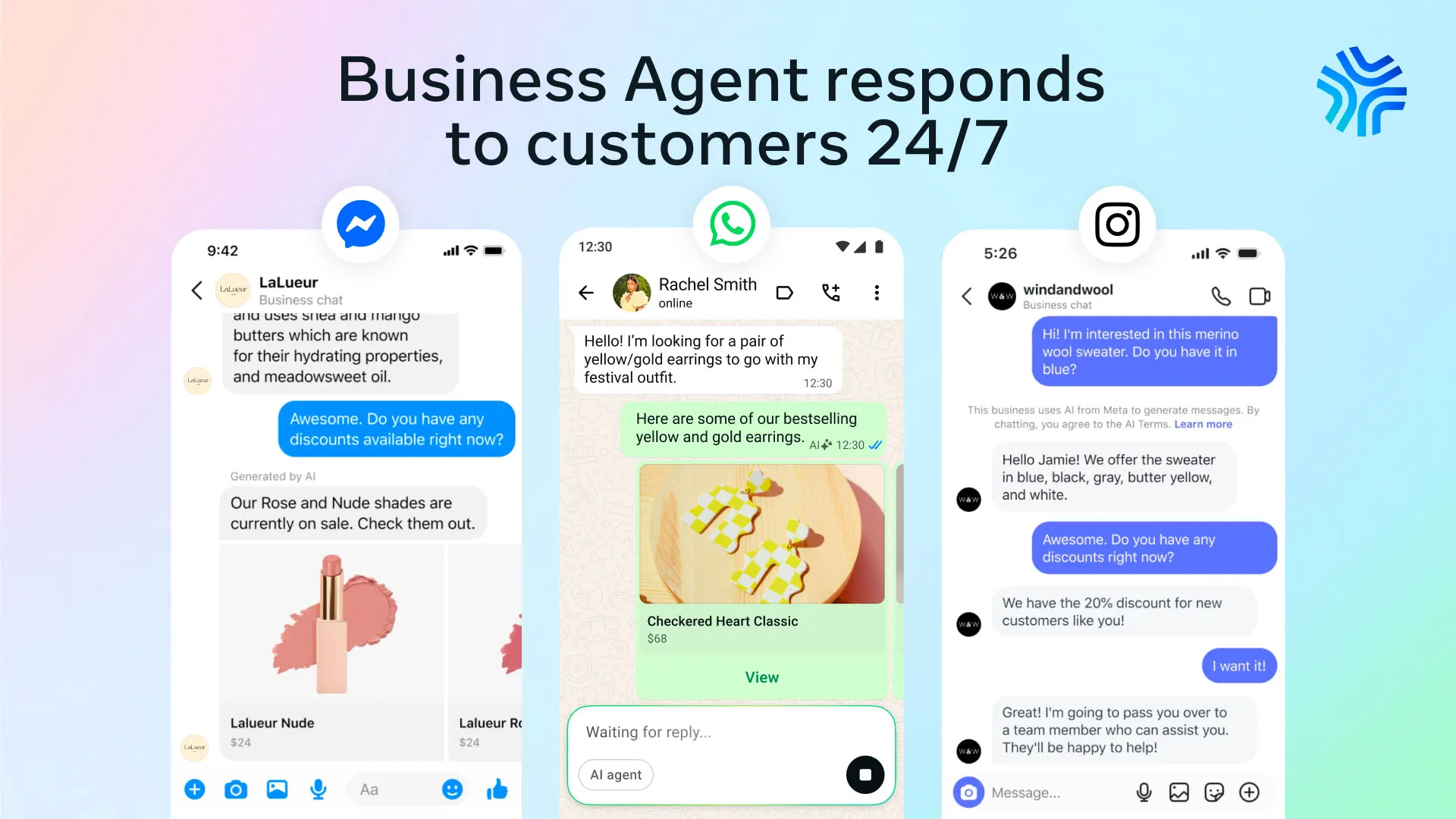
The history of digital channels keeps repeating itself: the companies that build their foundation before the channel matures get years of cheaper attention and less competition. The Business Agent's free window is closing, Discovery is barely contested, and most of your competitors are still treating messaging as a support cost center. That combination won't last. :)
Full disclosure, as always: I'm the founder of Zoey, a WhatsApp journey automation platform for the travel industry, so I have skin in this game. It's also exactly why I follow this space as closely as I do.
-- Bram Versteegh
Bram Versteegh is the founder of MartechNext, covering the business of AI in marketing: who's building it, who's funding it, and how industries put it to work.
Enjoyed this piece? Every week, What's Next delivers sharp analysis, the latest funding rounds in AI marketing, and the martech news that actually matters. Straight to your inbox, free.