WhatsApp's iPad Accounts and CarPlay Update Aren't Cute Features, They're Platform Strategy
Meta's new WhatsApp features look like small UX polish. For marketers, they're a signal about where the conversation channel is heading next.

In this article:
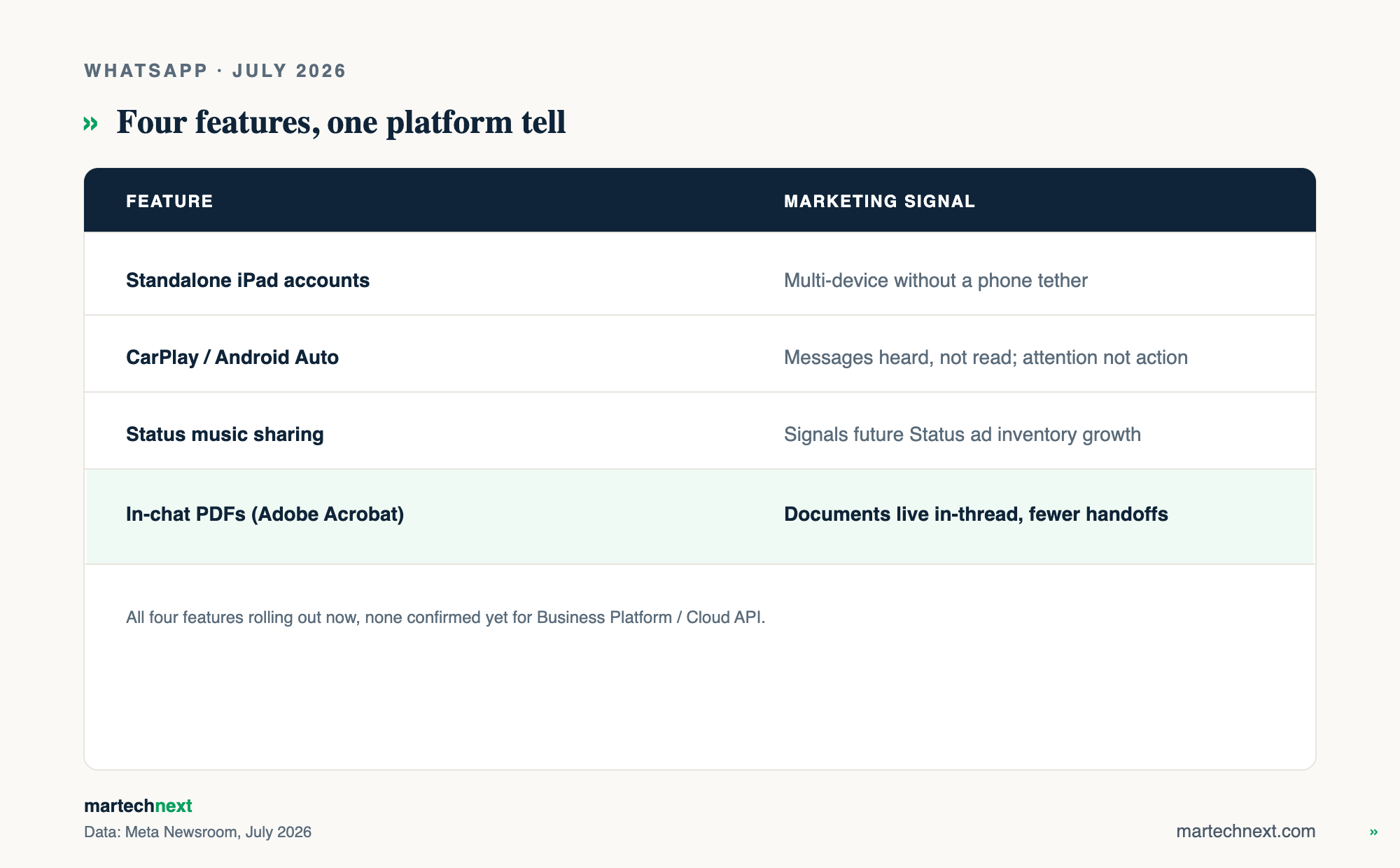
- What Meta actually shipped for WhatsApp this week: standalone iPad accounts, revamped CarPlay/Android Auto, in-chat PDFs, Status music sharing
- Why a consumer feature bundle is actually a platform-expansion move, and what that means for the "conversation is the new funnel" thesis
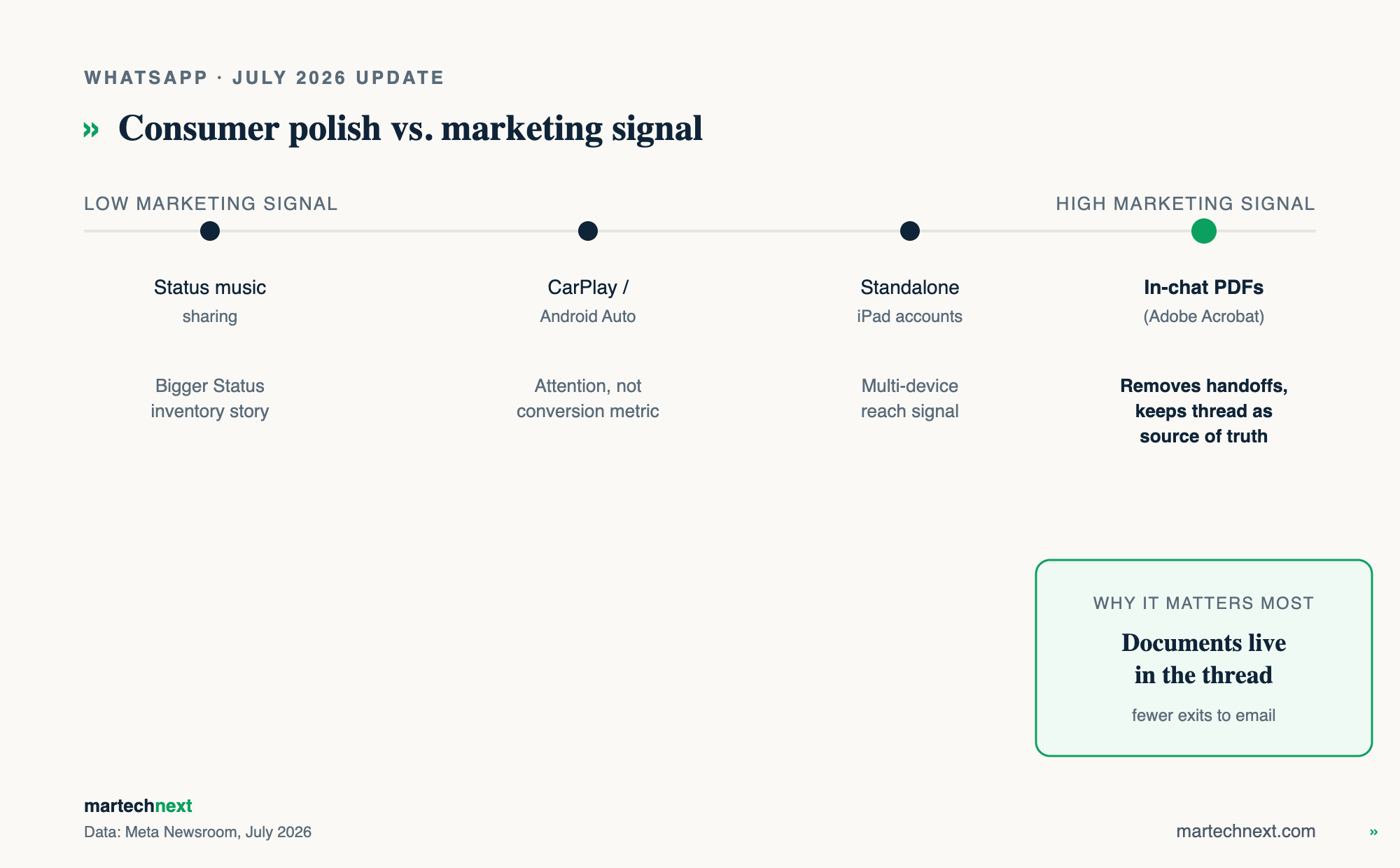
- The one feature (in-chat PDFs) that quietly matters more for marketers than the other three combined
- Where I'd caution against over-reading a UX drop as a business-platform announcement
- A short checklist for what to actually do with this news this quarter
Picture a customer support lead at a mid-sized airline. In the morning, she replies to a stranded passenger from her phone. On the drive to the office, she hears the next message read aloud through CarPlay and dictates a reply hands-free. At her desk, she opens a boarding pass PDF a colleague sent, straight inside the chat, annotates it, and sends it back. That evening, from her iPad on the couch, she checks in on the same conversation thread, no phone required.
Nothing in that day involved a new marketing feature. But it shows exactly what Meta just built: a version of WhatsApp that follows you across every screen and every moment, not just the one in your pocket. That's the story worth paying attention to, more than any single feature on the list.
The details
On July 22, 2026, Meta announced a set of WhatsApp updates rolling out across devices (Meta Newsroom). The headline items:
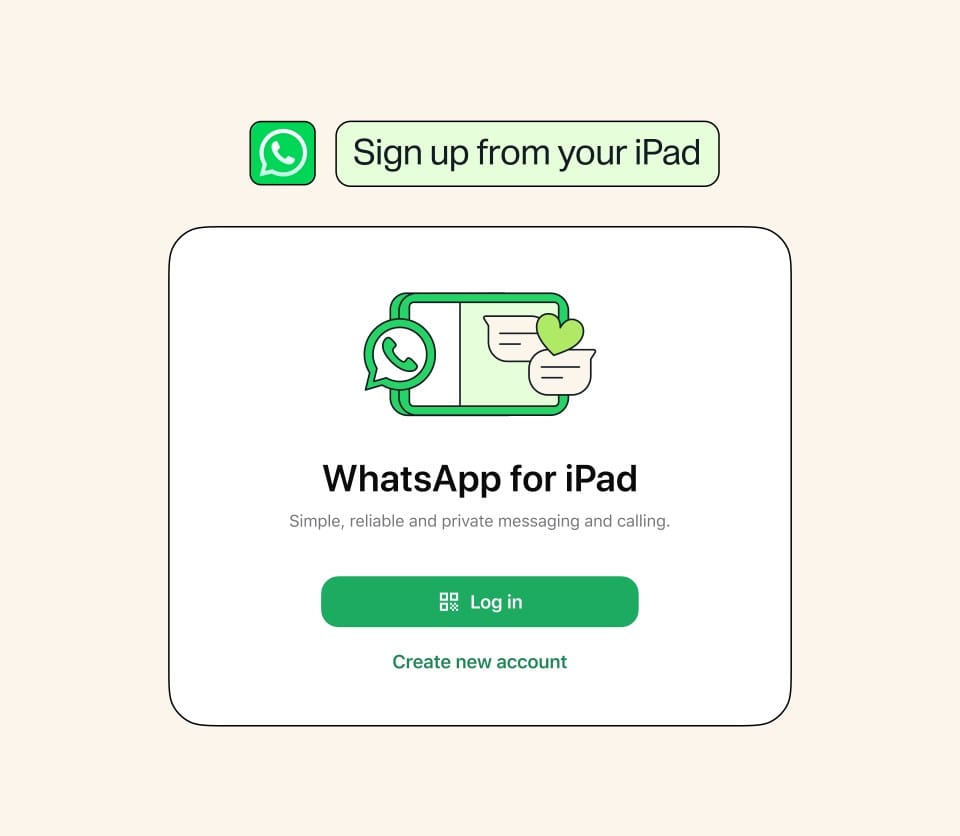
- Standalone iPad accounts. You can now register a WhatsApp account directly on iPad, no phone-linking required.
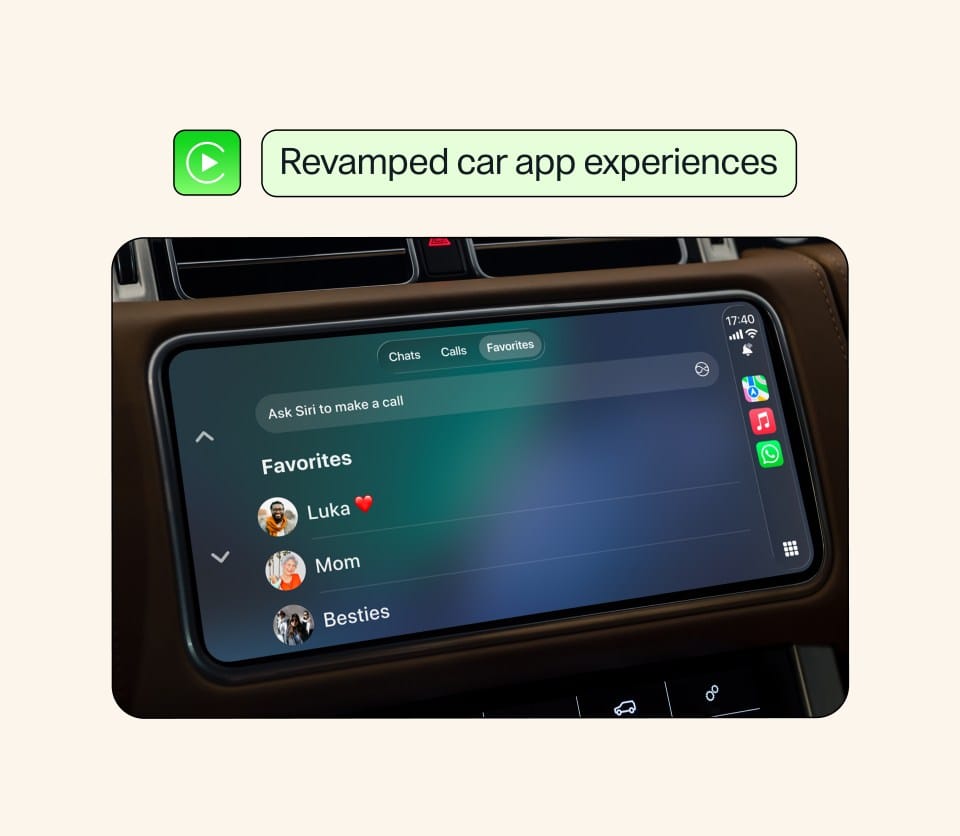
- Revamped CarPlay and Android Auto. A refreshed hands-free audio experience: hear and respond to messages, make calls, view call history, and reach favorites from the car's screen.
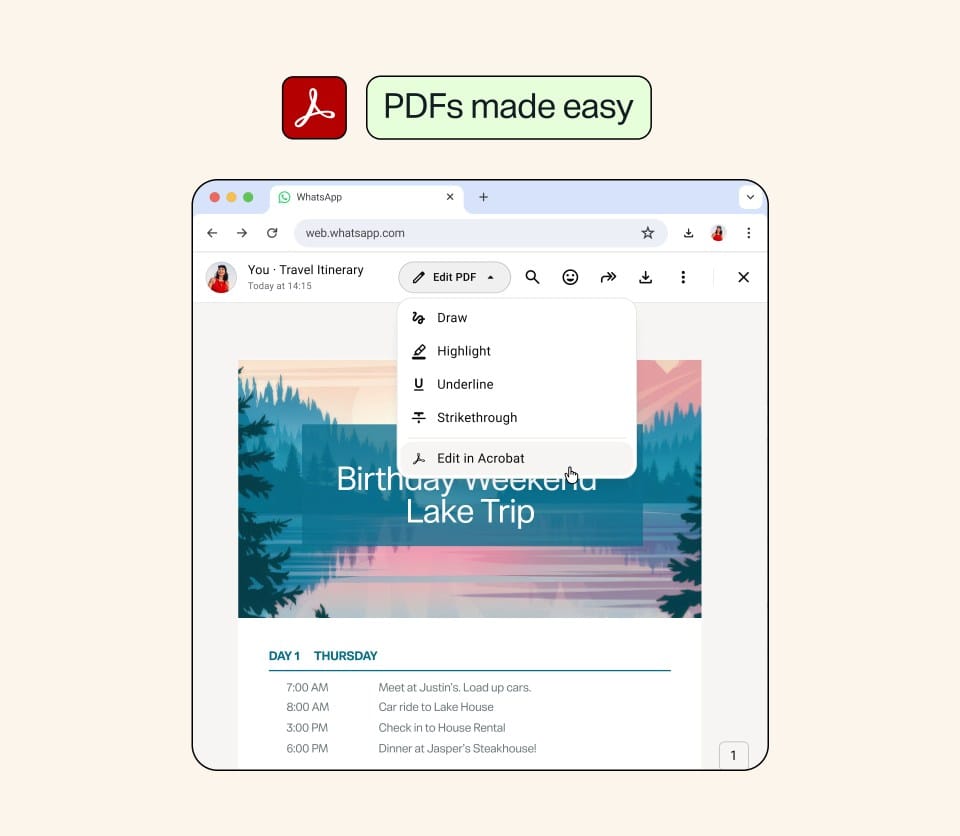
- In-chat PDFs. PDFs now open directly inside WhatsApp on web and desktop, with lightweight annotation and highlighting, powered by Adobe Acrobat.
- Status music sharing. Users can share a song from Apple Music or Spotify straight to their WhatsApp Status.
Meta framed it simply: "WhatsApp can keep up with how you actually live" (Meta Newsroom). All four features are rolling out now.
The MartechNext take
This is a consumer release, but it's evidence for a marketing thesis
None of these four features is a business tool. There's no new template type, no new API endpoint, no pricing change. If you're scanning this for a reason to rebuild your WhatsApp Business flows tomorrow, there isn't one, yet.
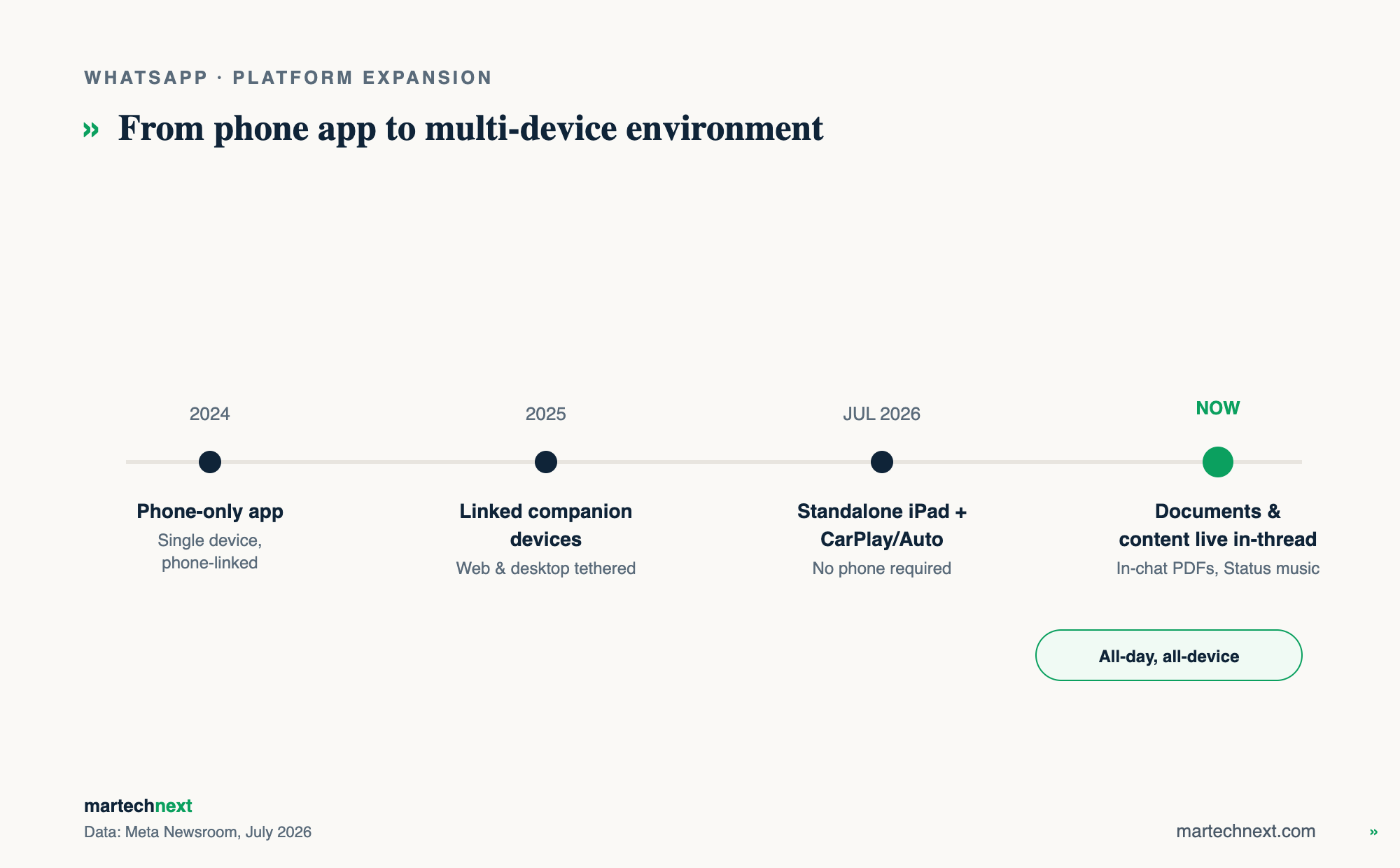
But step back and the pattern is clear. Meta isn't adding features to WhatsApp so much as removing the boundaries around it: no longer "the app on your phone," but an environment that follows you into the car, onto a second device, into your working documents, into what you're listening to. That's a deliberate platform play, and it's consistent with something I've been arguing for a while: the conversation is becoming the new funnel. Every time Meta widens the number of daily moments where a WhatsApp thread is open, it widens the surface where a brand conversation, a support flow, or eventually a purchase can happen too.
This also fits the pattern I flagged with Meta Business Agents: early movers on a platform shift capture disproportionate advantage, because habits and defaults get set before the channel fully matures. WhatsApp becoming an all-day, all-device presence for consumers is exactly the kind of shift that rewards brands who are already fluent in the channel when the commerce layer catches up to the consumer layer.
The feature that actually matters: PDFs living inside the thread
Of the four updates, the one marketers should sit with is in-chat PDFs. Right now, a lot of WhatsApp business communication still bounces the customer out of the thread: a booking confirmation link, an invoice attachment that opens a separate viewer, a contract that gets emailed "for your records." Every one of those exits is a small tax on the relationship, a moment where the customer leaves the conversation to do something the conversation should have handled natively.
Adobe Acrobat-powered PDFs that open and can be annotated directly inside WhatsApp point toward a future where the itinerary, the invoice, the signed agreement, doesn't just get sent through the thread, it lives in the thread. That's a small technical detail with a real business implication: fewer handoffs, fewer chances to lose the customer to email, more of the relationship staying inside a single, ownable channel.
Say a mid-sized tour operator sends a 12-page itinerary as a PDF today. The customer downloads it, maybe forwards it to a travel companion by email, and the WhatsApp thread goes quiet until the next automated update. If that document instead lives natively in the chat, with the ability to annotate ("confirmed, changing the Tuesday activity") right there, the thread stays the single source of truth for the whole trip. That's not a huge leap in imagination, it's just following where Meta is clearly pointing.
CarPlay and Android Auto: attention, not conversion, and that's fine
The revamped in-car experience is genuinely useful for consumers, and it's a reminder that "read rate" is going to mean something different soon. Hands-free, voice-read WhatsApp messages mean your business notifications, delivery updates, appointment reminders, boarding alerts, might get consumed by ear while someone's driving, not read on a screen.
That has a practical consequence for anyone writing WhatsApp Business templates: messages need to work when heard, not just when read. A message stuffed with emoji, links, and abbreviations reads fine on a screen and sounds like nonsense out loud. Nobody's measuring this yet, and I wouldn't rewrite your entire template library over one feature announcement, but it's worth testing a handful of your highest-volume automated messages by having someone read them aloud. If it sounds like it was written for a screen, it probably was.
Status music sharing: minor feature, bigger inventory story
On its own, sharing a song to your Status is not a marketing event. But it's one more data point in Meta's ongoing investment in Status as a content format, richer Status content historically precedes richer Status monetization. I've flagged Status Ads as a channel worth watching, and every feature that makes Status a more expressive, more frequently used format increases the value of that inventory down the line. Worth tracking, not worth building a campaign around yet.
Where I'd push back on over-reading this
Two honest caveats, because a feature bundle is not a strategy shift and shouldn't be treated as one.
First, nothing here has been confirmed for the Business Platform or Cloud API. In-chat PDF annotation is currently described for web and desktop, for personal use (confirm from announcement whether or how this extends to Business API document delivery). If your team is planning to send annotatable documents through automated business flows, check Meta's Business Platform documentation directly before you commit a roadmap to it.
Second, don't confuse reach with response. A message read aloud through CarPlay is a message that got heard, that's attention, not action. It's tempting to fold "voice-read in the car" into your engagement metrics as if it behaves like an opened message on a screen, but until Meta or independent research clarifies how (or whether) these interactions are measured and attributed, treat it as a channel-consumption statistic, not a conversion statistic. That's the same discipline I'd apply to any channel open-rate claim.
What to actually do with this, this quarter
1. Read your top five automated WhatsApp templates out loud. If they don't work as spoken sentences, rewrite them. CarPlay and Android Auto make this a real, if small, consideration now.
2. Map your document-heavy customer touchpoints (itineraries, invoices, contracts, boarding passes) and flag which ones currently force the customer to leave WhatsApp. That's your shortlist for when native, in-chat document handling reaches the Business API.
3. Keep an eye on Status, not because this update changes anything for advertisers today, but because Meta is clearly still investing in the format. If you've been testing Status Ads, or considering it, this is a "watch, don't wait" signal.
4. Don't retrofit a strategy document around a consumer feature drop. Confirm anything business-critical against Meta's actual Business Platform changelog before you brief your team.
5. Revisit your WhatsApp channel mix conversation with this frame: WhatsApp is no longer "the messaging app," it's becoming the connective layer across a customer's devices and moments. That's a bigger claim on attention than most brands are currently designing for.
None of this requires a rebuild by next week. But if you're still treating WhatsApp as a single-device notification channel, this update is a nudge that Meta isn't building it that way anymore, and your customers are already living in the multi-device version whether your martech stack has caught up or not.
Verdict: this is a minor release with a major tell. The individual features won't move a single KPI on their own, and I wouldn't spend budget reacting to them directly. But the direction, WhatsApp as an all-day, all-device environment rather than a phone app, is exactly the trajectory the "conversation is the new funnel" thesis predicts, and it's worth building your 2026 channel roadmap with that trajectory in mind, not against it.
Wrestling with where WhatsApp actually fits in your channel mix, beyond the notification layer? I'd love to exchange thoughts.
-- Bram Versteegh
Bram Versteegh is the founder of MartechNext, covering the business of AI in marketing: who's building it, who's funding it, and how industries put it to work.
Enjoyed this piece? Every week, What's Next delivers sharp analysis, the latest funding rounds in AI marketing, and the martech news that actually matters. Straight to your inbox, free.